The Russian State — or Kievan Rus' — is a unique historical phenomenon that emerged at the intersection of the vast forested expanses of the North and the open steppe corridors of the South. Imagine an enormous territory where dense oak groves and impassable swamps of the north gradually gave way to the fertile black soils of the south, while mighty rivers — the Dnieper, Volkhov, and Western Dvina — served not only as communication routes but also as vital arteries of trade, linking the Baltic Sea with the Black Sea. This was an era when the will of individual rulers, the commercial ingenuity of Slavic and Finno-Ugric tribes, the martial valor of the Varangians, and profound spiritual quests intertwined into a single tight knot, creating one of the greatest empires of medieval Europe. By the 11th century, in terms of area, Kievan Rus' surpassed many Western European kingdoms, and in terms of cultural development and international prestige, it stood alongside Byzantium, the Holy Roman Empire, and the Frankish state. Its history is not merely a chronicle of princely wars and campaigns, but a dramatic process of nation-building, in which disparate tribes living under a tribal system forged an early feudal state with its own legal system, writing, architecture, and self-awareness.
The history of Rus', as it has come down to us, begins with a legend recorded in the Tale of Bygone Years (Povest' vremennykh let) — the earliest surviving chronicle, compiled around 1113 by the monk Nestor of the Kiev Caves Monastery. In the 9th century, East Slavic tribes (Polyans, Drevlians, Krivichians, Ilmen Slavs, Severians, Radimichians, Vyatichians) and neighboring Finno-Ugric peoples (Chud, Merya, Ves) lived amid constant internal feuds and external threats. The trade route “from the Varangians to the Greeks,” running along rivers from the Baltic through Ladoga, the Volkhov, Lake Ilmen, the Lovat, and the Dnieper to the Black Sea, brought wealth but also attracted raiders. Tired of internal strife and the need to pay tribute to the Khazars, the tribes in 862 made a fateful decision. According to the chronicle, they sent envoys across the sea to the Varangians-Rus with the famous words: “Our land is great and abundant, but there is no order in it. Come to rule and govern us.” This appeal became a symbol of voluntary invitation to power, although modern historians debate how much the legend reflects reality and how much it represents a later ideological construct of the Rurikids.
The call was answered by the Varangian chieftain Rurik (or Hrörekr, as the Scandinavians may have called him). He first settled in Ladoga and later in Novgorod (or, according to some versions, Staraya Ladoga). Although debates about the “Norman question” — the role of Scandinavians in the creation of Rus' — have raged among historians for more than two centuries, archaeological finds (Varangian burial mounds with weapons, Scandinavian fibulae, runic inscriptions) and data from Arab and Byzantine sources confirm one thing: Varangian leaders brought with them a professional military organization — the druzhina (retinue) — experience in long-distance sea and river trade, and skills in building fortifications and ships. They acted as a catalyst for state-building, but not as the sole creators: the foundation remained Slavic communities, veche (assembly) traditions, and the economic way of life. Rurik ruled until 879, laying the foundation for a dynasty that lasted more than seven centuries. After his death, the regent for the young Igor was Oleg the Prophet — an almost mythical figure whom the chronicle portrays as a wise warrior and seer.
If Rurik laid the foundation in the North, then the true architect of the unified state was Oleg. In 882, he undertook a grand campaign to the south. According to the chronicle, he tricked and killed the local rulers of Kiev, Askold and Dir (possibly also Varangians, but independent), and declared Kiev the capital. “Let this be the mother of Russian cities,” Oleg is said to have declared, and this phrase became the motto of the new geopolitical reality. Oleg united the two key nodes of the “route from the Varangians to the Greeks” — Novgorod and Kiev — creating a single state from the Baltic to the Dnieper. He did not limit himself to territorial gains. Methodically, year after year, Oleg subjugated the surrounding tribes: the Drevlians, Severians, Radimichians, Ulichians, and Tivertsians, transferring them from Khazar suzerainty to Kiev’s control. He introduced the system of polyudye — the prince’s annual circuit of the lands to collect tribute — which served both as a means of control and a way to maintain the authority of central power.
The pinnacle of Oleg’s reign was the famous campaign against Constantinople (Tsargrad) in 907. The chronicle describes it in epic terms: the Russian boats supposedly approached the city walls on wheels, and the Greeks, terrified, sued for peace. Oleg nailed his shield to the Golden Gate — a gesture symbolizing not only military victory but also Rus'’s equal entry into the system of international relations. The first written treaties with Byzantium (907 and 911) guaranteed Russian merchants duty-free trade, protection of property, and even the right to hire Byzantine mercenaries. These agreements opened the way for economic takeoff: Russian furs, honey, wax, slaves, and weapons flowed south, while in return came fabrics, wines, spices, jewelry, and, most importantly, cultural influences. Oleg died in 912 (according to legend, from a snakebite emerging from the skull of his horse), but the state he founded was already no longer merely a union of tribes, but a full-fledged early state formation.
After Oleg, power passed to Rurik’s son, Igor (912–945). His reign was marked by a stubborn struggle to maintain control over the already subjugated tribes. Igor continued the policy of expansion: he launched two unsuccessful campaigns against Byzantium (941 and 944), but ultimately concluded a new treaty confirming Russian privileges. However, the main problem remained internal instability. Igor’s tragic end in 945 became a harsh lesson for all subsequent rulers. Attempting to collect tribute from the Drevlians beyond the usual amount, the prince twice came to them with his retinue. The uprising flared instantly: the Drevlians killed Igor by tying him between two bent trees, which then tore his body apart. This execution demonstrated how fragile central power was without reforms.
Power passed to his widow, Princess Olga, regent for the young Svyatoslav. She proved herself an outstanding state reformer, one of the brightest figures in Rus' history. Realizing that chaotic tribute collection (polyudye) led to social explosions and weakened the state, Olga carried out the first tax reform in Rus' history. She established “lessons” — a fixed amount of tribute from each land — and “pogosts” — special administrative and trading centers where this tribute was brought. Instead of endless princely circuits, permanent collection points appeared, which strengthened the administrative apparatus and reduced arbitrariness. Olga was also the first ruler of Rus' to officially accept Christianity. In 957, she visited Constantinople with a large retinue and, according to accounts, was baptized by Emperor Constantine VII Porphyrogenitus himself. Although Olga did not dare to baptize the entire country, fearing resistance from the pagan retinue and boyars, her personal example opened the way for future Christianization. She built the first churches in Kiev and Pskov, corresponded with Otto I, Emperor of the Holy Roman Empire, and demonstrated diplomatic flexibility. Olga ruled wisely until 969 and was later canonized as Saint Olga, Equal-to-the-Apostles.
Her son, Svyatoslav Igorevich (964–972), was a man of a completely different mold — a pure “prince-warrior,” the embodiment of the pagan ideal. For his lightning campaigns, refusal of everyday comforts (he slept in the open air with a saddle under his head, ate horse meat, and did not carry tents), contemporaries and later historians called him the “Alexander the Great of Eastern Europe.” Svyatoslav began by crushing the Khazar Khaganate — Rus'’s main rival in the south. In 965–969, he captured Itil (the Khazar capital), Sarkel, and other fortresses, opening the way for Slavic colonization of the Azov region and Tmutarakan. Then the prince intervened in Balkan affairs: in 967–971, he fought against Bulgaria and Byzantium at the request of Emperor Nikephoros II Phokas, but soon turned his weapons against the Greeks themselves. Svyatoslav dreamed of creating a vast empire from the Danube to the Volga, but his policy proved risky. While the prince sought glory in distant campaigns, Kiev remained defenseless against the Pecheneg nomads. It was from their hands that Svyatoslav perished in 972 at the Dnieper rapids: the Pechenegs ambushed him, cut off the prince’s head, and made a drinking cup from his skull. Despite the tragic end, Svyatoslav’s campaigns significantly expanded Rus'’s influence and weakened its main rivals.
Svyatoslav’s death led to the first major internecine strife among his sons — Yaropolk, Oleg, and Vladimir. The victor was Vladimir Svyatoslavich, the future Vladimir the Great (980–1015). His reign began with an attempt to reform paganism: a grand pantheon was created in Kiev, headed by Perun, including statues of Khors, Dazhbog, Stribog, Simargl, and Mokosh. However, the prince soon realized that the old faith could not unite the vast country, overcome tribal differences, or ensure its authority on the international stage. In 988, an event occurred that forever changed the vector of Russian history — the Baptism of Rus'. The chronicle recounts the legend of the “choice of faith”: Vladimir sent envoys to different peoples — Muslim Bulgars, Jewish Khazars, Catholic Germans, and Orthodox Greeks. The choice fell on Byzantium: the envoys were struck by the beauty of the liturgy in Hagia Sophia of Constantinople. The real reasons were deeper: close trade and political ties with the empire, the desire for a dynastic marriage with the emperor’s sister Anna, and, above all, the understanding that Christianity would provide a powerful tool for centralizing power.
The baptism took place en masse: Vladimir himself was baptized in Chersonesus (Korsun), then baptized the people of Kiev in the Dnieper, and missionaries were sent throughout Rus'. The consequences were truly grandiose and multifaceted. First, culture: Cyrillic writing (developed in the 9th century by Cyril and Methodius for the Slavs) came to Rus', enabling the development of chronicle-writing, hagiographic literature, and translations. Second, architecture: large-scale construction of stone churches began — the Tithe Church in Kiev (989–996), the first stone building in Rus', decorated with mosaics and frescoes by Byzantine masters. Third, society: Christianity brought a new morality — condemnation of polygamy, human sacrifices, and blood feuds; it contributed to the softening of customs and the formation of a unified worldview. Fourth, politics: accepting the faith from Byzantium placed Rus' on a par with leading Christian powers, provided a metropolitan see in Kiev, and strengthened princely power as “God-given.” Vladimir also turned Rus' into a true fortress: he built a system of defensive lines on the southern borders — the famous “serpent mounds,” earthen ramparts with wooden fortifications stretching for hundreds of kilometers, protecting against the Pechenegs. Under him, new fortress-cities were founded (Pereyaslavl, Belgorod), and the state reached its territorial peak — from the Carpathians to the Volga.
Kievan Rus' reached the height of its power and prosperity under Vladimir’s son — Yaroslav the Wise (1019–1054). If Vladimir was the baptizer, then Yaroslav became the true enlightener and lawgiver. His reign began in the struggle against his brother Svyatopolk the Accursed, but after victory Yaroslav focused on internal construction. His main achievement in the field of law was the creation of Russkaya Pravda (“Russian Justice”) — the first written code of laws of the Eastern Slavs. This was a crucial step in replacing archaic tribal customs (blood revenge) with state justice. “Pravda” regulated wergild (monetary fines) for murders, bodily injuries, and thefts; protected the property of the prince, boyars, and smerds (free peasants); and introduced the concepts of “zakup” (dependent peasant) and “kholop” (slave). The system of fines not only ordered social life but also significantly replenished the princely treasury, enabling large-scale construction.
Yaroslav turned Kiev into one of the largest and most beautiful cities in Europe, striving to surpass Constantinople itself. The St. Sophia Cathedral he erected (1037), with its mosaics, frescoes, and 13 domes, became a symbol of the new Christian Rus'. Nearby rose the Golden Gate — a triumphal arch modeled on Constantinople’s. Under Yaroslav, the first state library was opened at St. Sophia, Greek books were actively translated (including chronicles, lives of saints, and theological treatises), and crafts flourished: jewelry reached new heights (gold and silver items with enamels), blacksmithing, and pottery. Chronicles note that Kiev had up to 400 churches and 8 markets.
Yaroslav’s foreign policy relied more on diplomacy and dynastic marriages than on swords. He entered history as the “father-in-law of Europe.” His daughters and sisters married European monarchs: Anna Yaroslavna became Queen of France (wife of Henry I), Elizabeth — Queen of Norway (wife of Harald Hardrada), and Anastasia — Queen of Hungary. Sons and other relatives married into Polish, Swedish, and Byzantine dynasties. This testified to Rus'’s highest prestige: allying with the Kievan prince was considered an honor by rulers of the oldest and most powerful houses. Yaroslav successfully fought the Pechenegs (finally defeating them near Kiev in 1036), Poland, and Byzantium, expanding and strengthening the borders.
By the mid-11th century, Rus' was a flourishing country. Contrary to common myths about the “dark Middle Ages,” the level of literacy was unusually high even by European standards — thousands of birch-bark documents found by archaeologists in Novgorod, Pskov, and other cities eloquently testify to this. They were written not only by princes and boyars but also by ordinary merchants, artisans, women, and even children. Their content — from business letters and debt notes to love messages and children’s scribbles — shows the vibrant, dynamic life of ancient Russian society.
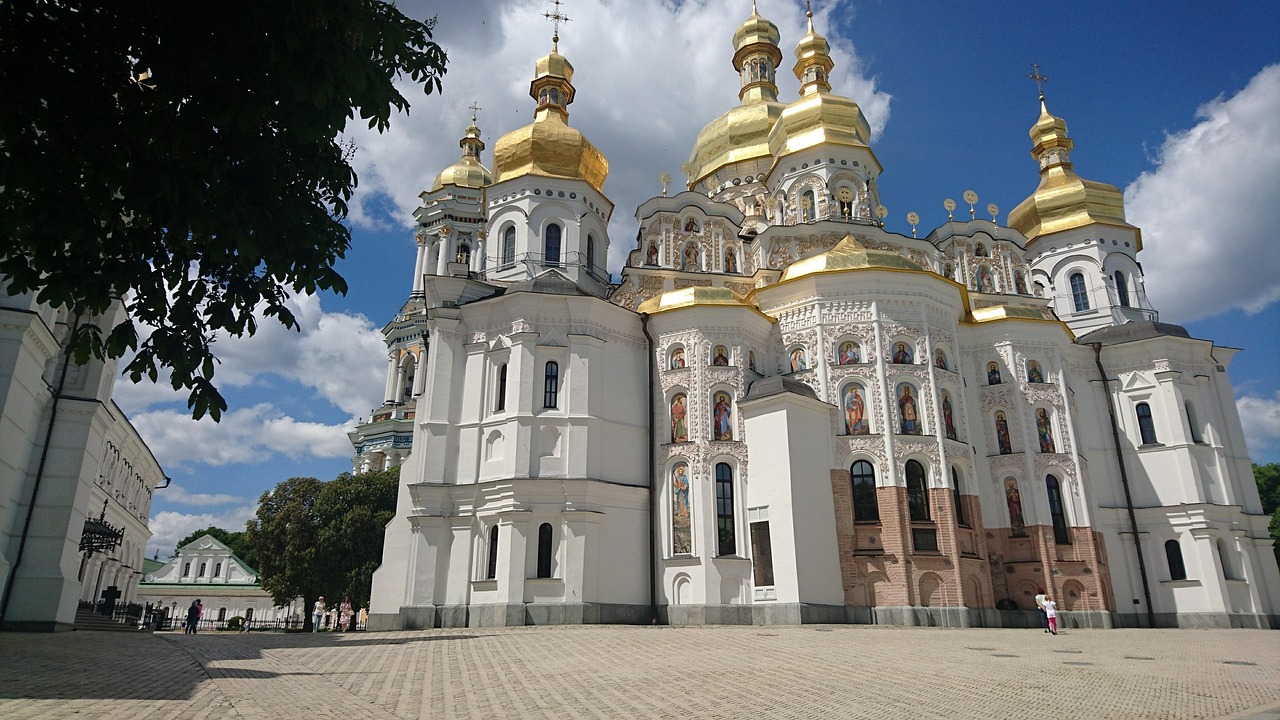
Cities were centers not only of princely power but also of popular freedom. In Novgorod and Pskov, traditions of veche (popular) governance flourished, where all free men gathered in the square to decide important issues — from electing a posadnik (mayor) to declaring war. The economy prospered through the export of furs (sable, marten, beaver), wax, honey, flax, high-quality iron, and slaves. Russian warriors were renowned as the best mercenaries in Europe (they even served in the Byzantine Varangian Guard), and Russian merchants were welcome guests in markets from Baghdad and Constantinople to Regensburg and London. Trade flowed along rivers and overland routes; the silver grivna became a universal monetary unit. The social structure included the princely elite and boyars, free smerd-communal peasants, dependent zakupы, and kholopy. The Church played an increasingly important role: the Kiev Caves Monastery (founded in 1051) became a center of education and chronicle-writing.
The Ancient Russian State, before the onset of the period of feudal fragmentation and the Mongol invasion, traveled a path that took other peoples centuries. In three centuries — from 862 to 1054 — a great power with a powerful army, developed legislation, rich culture, and international authority grew out of disparate forest tribes who had once paid tribute to the Khazars. The legacy of this era is enormous: from Russkaya Pravda, which became the foundation of Russian law, to the architectural masterpieces of Kiev’s St. Sophia; from Cyrillic writing, preserved to this day, to the Orthodox tradition that unites the Eastern Slavs. Even after fragmentation into appanage principalities and the terrible Mongol invasion of 1237–1240, when Kiev was destroyed and the lands devastated, the foundation laid by the Rurikids, Olga, Vladimir, and Yaroslav did not collapse. It became the basis for revival — first in Galician-Volhynian Rus', then in Vladimir-Suzdal, and ultimately in the Moscow state. Kievan Rus' proved that even at the junction of forest and steppe, barbarism and civilization, paganism and Christianity, something eternal could be created — a state that still lives in the memory of peoples as the cradle of Slavic civilization.